RHINO | GRASSHOPPER | PHOTOSHOP | TWINMOTION

RHINO | GRASSHOPPER | PHOTOSHOP | TWINMOTION

PARAMETRIC STAIR

PARAMETRIC STAIR

PARAMETRIC STAIR

This assignment develops a conceptual presentation for your parametric stair project by synthesizing earlier work—design narrative, precedent research, field trip notes, algorithms, and final stair design—into a coherent visual and verbal communication. Students create a four-slide digital deck and a 20” x 20” printed board that together articulate design, presentation, visual, and project narratives while experimenting with visual hierarchy, graphic style, and the distinct strengths of digital versus physical media.

This assignment develops a conceptual presentation for your parametric stair project by synthesizing earlier work—design narrative, precedent research, field trip notes, algorithms, and final stair design—into a coherent visual and verbal communication. Students create a four-slide digital deck and a 20” x 20” printed board that together articulate design, presentation, visual, and project narratives while experimenting with visual hierarchy, graphic style, and the distinct strengths of digital versus physical media.

This assignment develops a conceptual presentation for your parametric stair project by synthesizing earlier work—design narrative, precedent research, field trip notes, algorithms, and final stair design—into a coherent visual and verbal communication. Students create a four-slide digital deck and a 20” x 20” printed board that together articulate design, presentation, visual, and project narratives while experimenting with visual hierarchy, graphic style, and the distinct strengths of digital versus physical media.

Dribbling
Dribbling

Year

2025

Client

BRIAN RASCH

Category

SCHOOL

Product Duration

2 WEEKS
Research
Research

Students often struggle to translate complex parametric design processes into clear, legible presentations that communicate concept, context, and analysis across both digital and printed media.

Design
Design

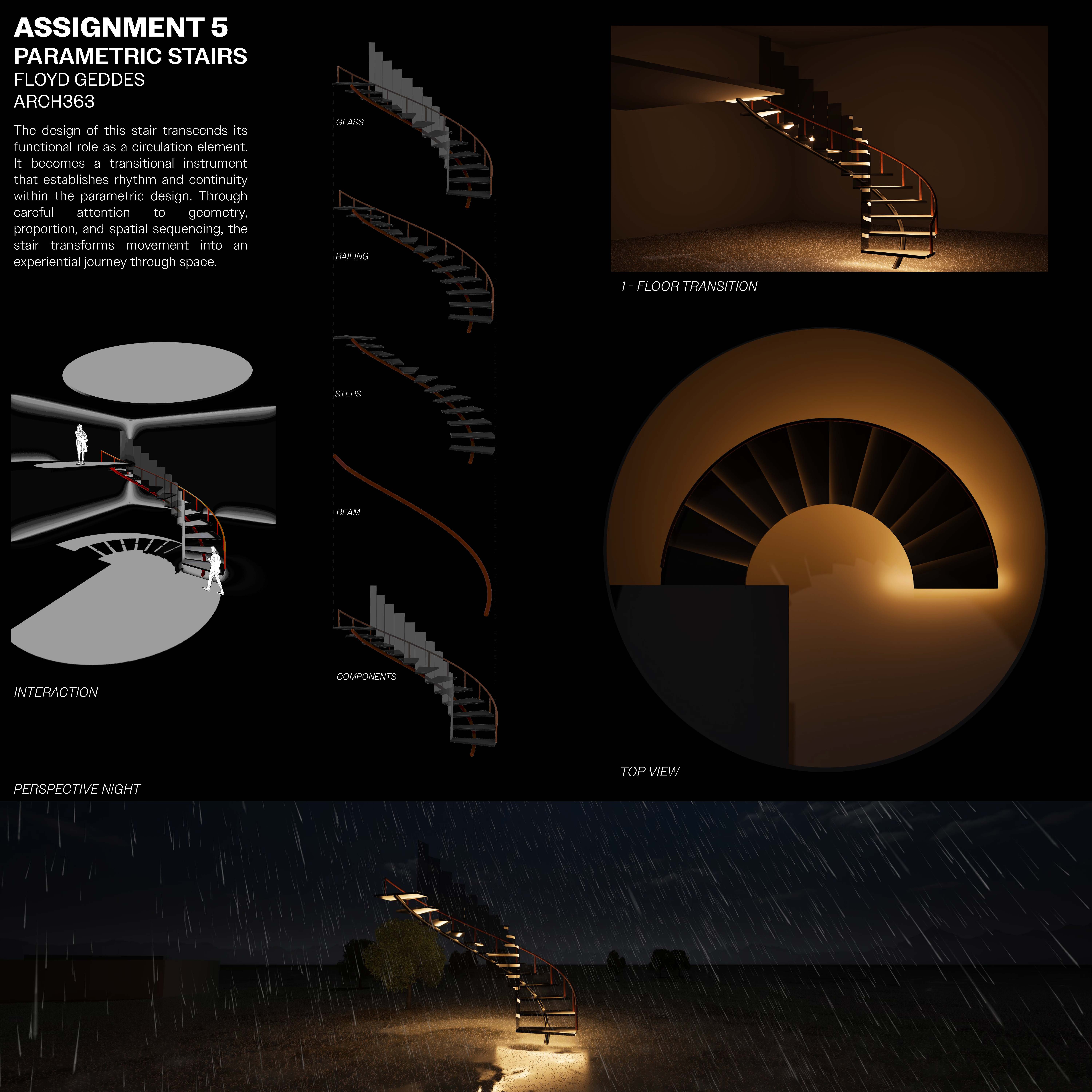
Assignment 5 structures the work into linked design, presentation, visual, and project narratives, guiding students to inventory and select artifacts, cartoon and critique their layouts, and refine a four-slide deck plus 20” x 20” board that demonstrate strong visual organization and a coherent argument for the parametric stair design.
Development
Development

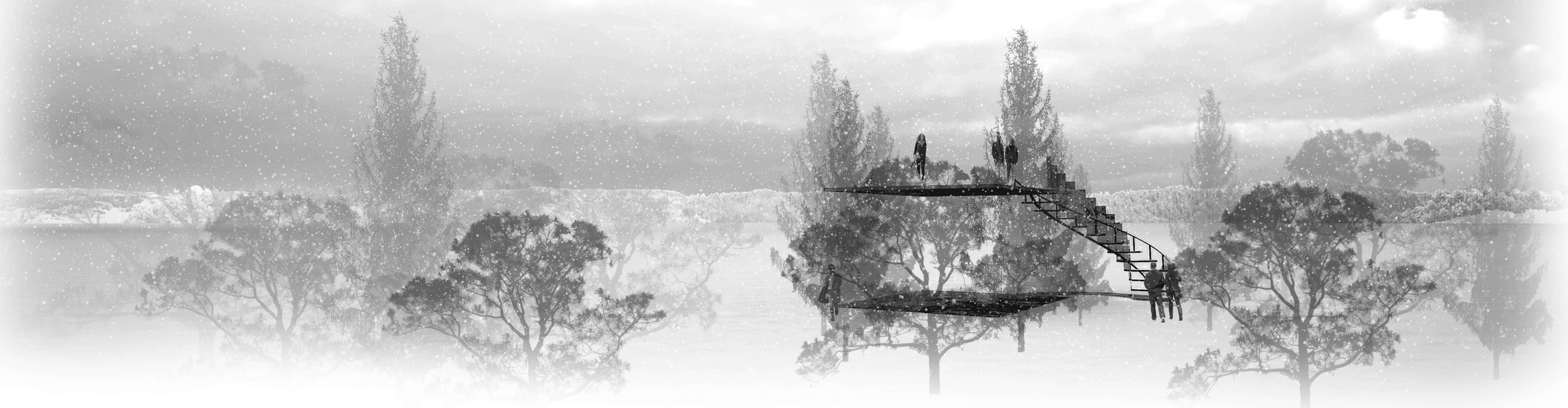
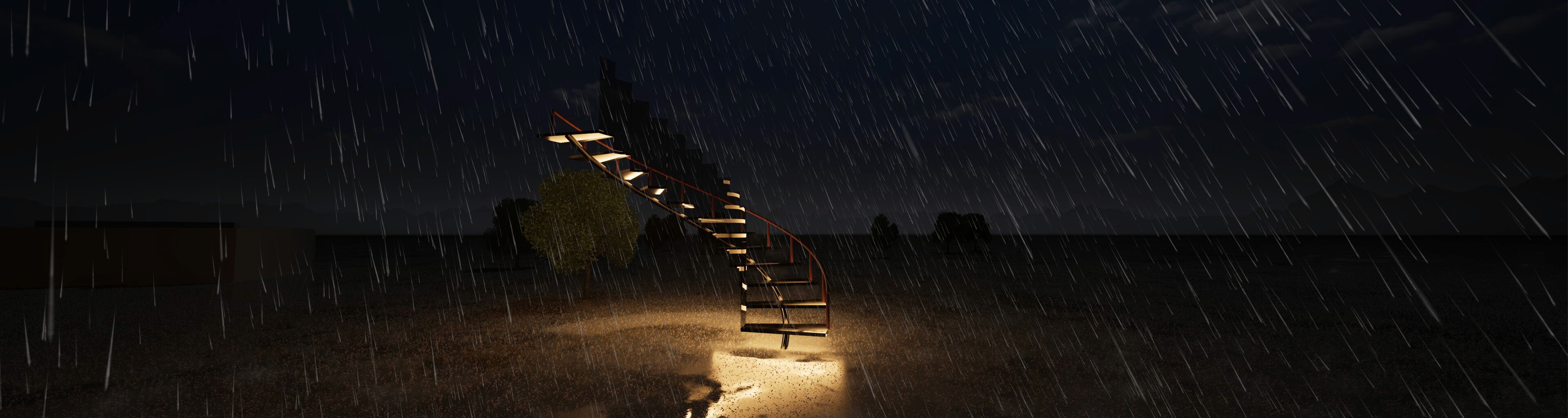
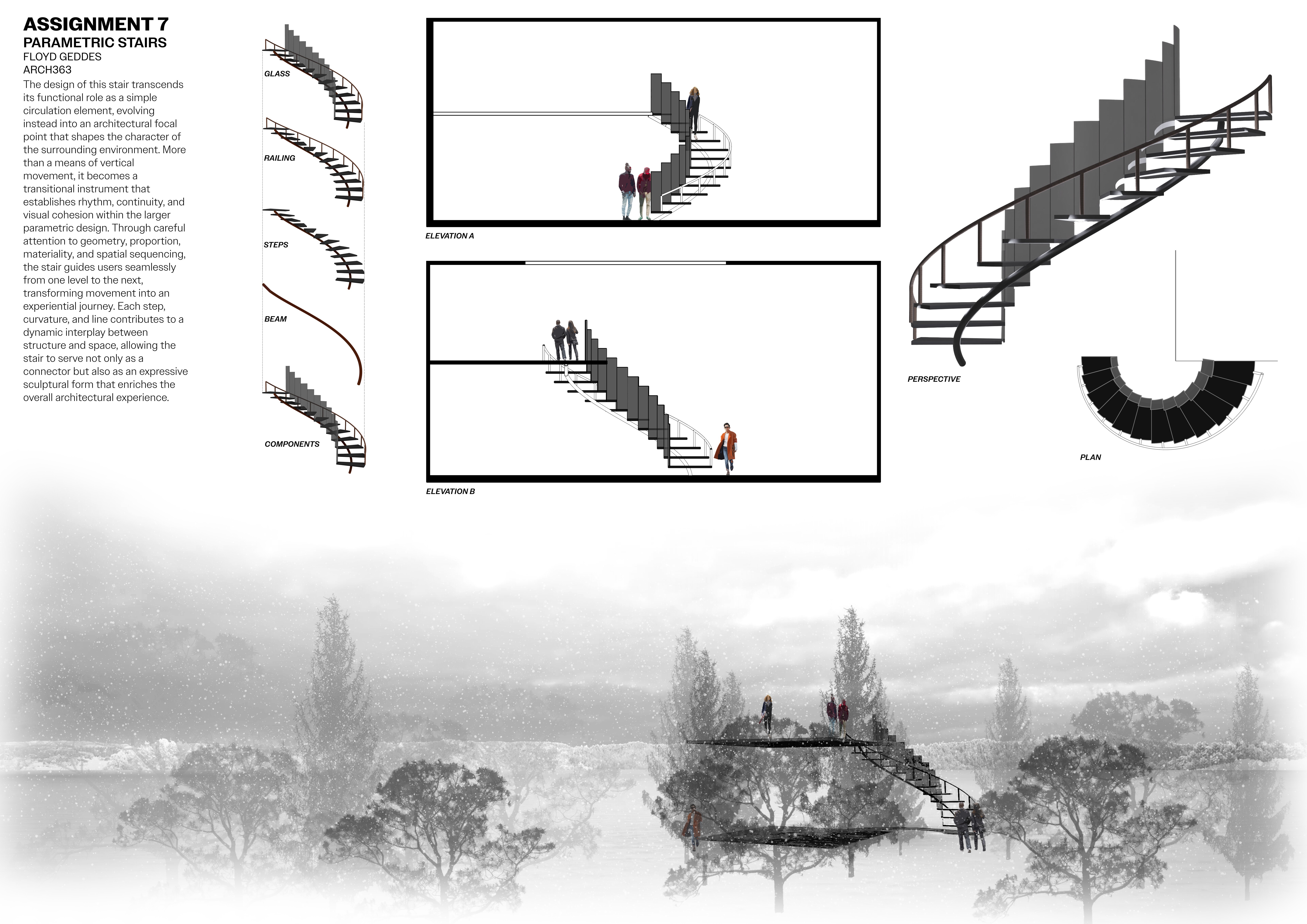
In ARCH 363, a student uses Assignment 5 to show how parametric design can turn a stair into an elevated spatial experience rather than just a circulation element. By systematically adjusting variables—tread depth, riser height, landings, railing rhythm, and light apertures—they explore how different parametric configurations shape movement, views, and moments of pause.

Carefully chosen materials, such as contrasting textures on treads and smooth handrails, help emphasize footfall, touch, and edge conditions, reinforcing the stair as a tactile sequence rather than a neutral passage. In the presentation slides and 20” x 20” board, the student uses diagrams, sections, and experiential images to connect these material and parametric decisions to user experience, highlighting framed vistas, compressed thresholds, and expanded landings. Peer critique then focuses on whether the visual hierarchy makes these experiential qualities legible, prompting refinements to composition, focal points, and captions. By the final pin-up, the stair is understood as a parametric and material system that choreographs light, movement, and atmosphere, demonstrating how computational control can enhance architectural experience.
GALLERY
GALLERY

Let'S WORK

TOGETHER

BASED IN BOZEMAN,

MONTANA

ARCHITECTURE STUDENT
+ FREELANCE WORK & INTERNSHIP

Let'S WORK

TOGETHER

BASED IN BOZEMAN,

MONTANA

ARCHITECTURE STUDENT
+ FREELANCE WORK & INTERNSHIP

Let'S WORK

TOGETHER

Let'S WORK

TOGETHER

BASED IN BOZEMAN,

MONTANA

ARCHITECTURE STUDENT
+ FREELANCE WORK & INTERNSHIP